

.svg)
Cleanses your skin
Bar Soap Original


Spills and knock overs can’t be completely avoided, even in hospitals but antibacterial wipes are there to clean the mess.
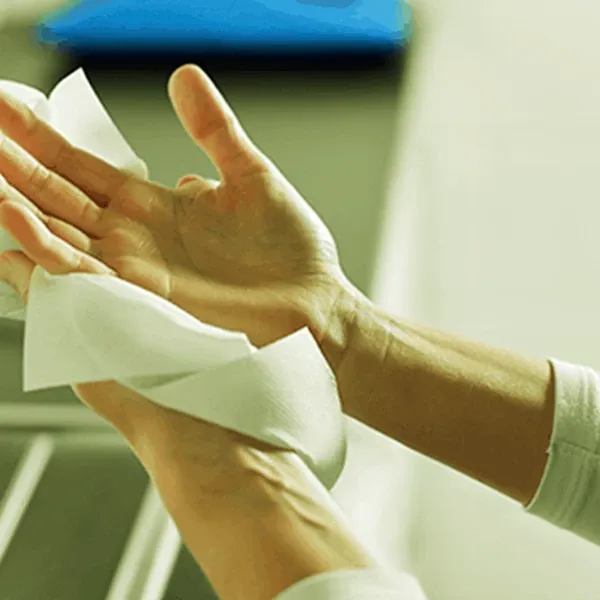
With the advancement in medical technology came the realization that germs can be present anywhere and can stay hidden even in front of our eyes.
As a collective effort, the human race has been trying to discover ways of eliminating the threat of germs for a long time. Among other ways, antibacterial wipes have become a modern and most suitable alternative to traditional cleaning and disinfecting methods, especially in hospitals.
In the pre-antibiotic era, cross infection usually proved to be a nail in the coffin for someone suffering from an ailment. This is one of the main reasons why infection prevention and control in hospitals and clinics is highly stressed and timely implemented.
Although at home, antibacterial wipes can be used to disinfect surfaces and objects occasionally, at hospitals and clinics, their use is governed by several crucial steps.
Regardless of the cleanliness and disinfection protocol, measure, or method, the motive for using antibacterial wipes remains the same - curb the spread of contagious diseases such as MRSA, Covid-19, cold, flu, etc.
Many patients with different ailments visit hospitals and clinics daily, and the threat of cross-infection via the skin, surfaces, objects, and even medical equipment is real.
To stop any such catastrophe, hospital staff use medical grade disinfectant wipes and multi-use antibacterial wipes with a set motive. These wipes contain a biocidal solution that has proven efficacy in avoiding infectious diseases.
Chemically formulated to fight most germs and inhibit the growth of bacteria, they have a lot of practical uses beyond medical facilities.
For example, from removing dirt and controlling mold and mildew buildup to disinfecting common home hygiene hotspots to prevent infections, medical grade disinfectant wipes are one of the best ways to protect yourself from the worst germs on the planet.
Washing your hands with antibacterial soap and water is the best method to ensure infection prevention and control in medical facilities. However, this hand hygiene measure can become difficult to uphold in various hospital settings and circumstances.
Healthcare providers have started using antibacterial wipes in hospitals and clinics to ensure that their hands remain germs-free even without soap and water.
In addition, spraying disinfectants combined with medical-grade sterilization provides a contamination-free treatment area.
The medical industry uses a variety of disinfectant wipe brands, each with different chemical disinfectant formulas shown to eliminate germs and bacteria.
Multiple locations in the medical facilities, such as the nurse's stations, computer stations, sign-in areas, waiting room, patient beds, bathroom hygiene hotspots, etc., require regular cleaning and disinfection throughout the day to reduce the risk of cross-contamination or the spread of infections.
Using medical disinfectant wipes to limit pathogens in high-traffic areas will keep the healthcare environment clean and help reduce health risks between professional cleaning services.
Many healthcare professionals use antibacterial multiuse wipes to clean and disinfect various medical equipment.
And if you have medical equipment at home, such as a CPAP machine or an air purifier, it’s a good idea to wipe down the buttons and knobs you frequently touch.
In addition, medical grade disinfectant wipes are made from a technical fabric that quickly removes dirt, smudges, and spots without damaging the surface.
While antibacterial wipes heavily contribute to infection prevention and control in hospitals and clinics, you shouldn’t rely on them to disinfect the entire facility.
In critical areas with a high risk of infection transmission, quaternary or sporicidal disinfectants such as disinfectant sprays and antiseptic liquids are more effective than medical disinfectant wipes.
Areas requiring high-level sporicidal disinfectants include but are not limited to:
Cleanses your skin
pH-Balanced
Here are our top tips to keep your kitchen and bins clean and disinfected
Our top cleaning picks that will make your life as a new mum just that tad bit easier