

.svg)
pH-Balanced
Bodywash Nourish


Food poisoning (foodborne illness) happens when we eat food that has been contaminated – usually by germs, bacteria, or a virus. It can be unpleasant, but it rarely needs medical treatment, and you should return to full health in a day or two.
In most cases, the food is contaminated by bcteria or viruses like:
Raw foods, including meat, poultry, eggs, fish and seafood, raw fruit, and vegetables, can often contain high levels of germs that easily spread to other foods and surfaces around the kitchen on unwashed hands and via surface contamination (e.g., chopping boards, cooking utensil, taps).
Cross-contamination between surfaces contributes to nearly 40% of all food-borne illnesses. For these reasons, we must take extra care when handling or preparing food in the kitchen and define clear food hygiene rules to live by for the rest of our lives.
While most food poisoning cases don’t need medical attention, some rarely do. The most common serious problem caused by food poisoning is dehydration.
As long as you drink a sufficient amount of fluids to replenish what you've lost due to vomiting or diarrhea, it's unlikely that you'll become dehydrated when you're in good health.
Even though food poisoning is a common disease, many people aren’t aware of it. Therefore, this article discusses food poisoning symptoms, types, causes, treatment, and prevention.
Campylobacter, Salmonella, Listeria, Escherichia coli (E. coli), and Norovirus (winter vomiting virus) are the prime culprits for food poisoning.
Here are some of the most common causes:
Understanding the different types of food poisoning is important for identifying the source of illness and implementing appropriate treatment and prevention measures.
Here are some common types of food poisoning:
Salmonella bacteria often contribute to cases of foodborne illness, with symptoms typically emerging within a timeframe ranging from 6 hours to 6 days after exposure.
Common symptoms include diarrhea, fever, and abdominal cramps. This pathogen is mostly found in poultry, eggs, dairy products, fruits, vegetables, meat, poultry, nuts, nut products, and spices.
Some certain Escherichia coli (E. coli) bacteria can lead to severe illness, characterized by symptoms like bloody diarrhea, abdominal cramps, and kidney damage, typically emerging within a timeframe ranging from 2 to 10 days after exposure.
This pathogen is mostly found in raw or undercooked meat, unpasteurized milk or juice, soft cheeses from unpasteurized milk, and fresh fruits and vegetables.
Campylobacter (bacterium) food poisoning often results in fever, nausea, abdominal cramps, and diarrhea (sometimes bloody), typically emerging within a timeframe ranging from 2 to 5 days after exposure. It is commonly associated with undercooked poultry, shellfish, unpasteurized milk, and contaminated water.
Depending on the type of germ involved, symptoms may begin from one to 36 hours after eating contaminated food.
You may experience one or more of the following:
The best way to prevent food poisoning is to abide by food safety and hygiene rules and avoid any food that may be unsafe.
Here’s how to prevent food poisoning:
Frequently wash your hands with antibacterial soap or liquid hand wash for at least 20 seconds. Do this, especially after using the toilet, eating or drinking, and before and after handling food.
You must also remember the 7 steps for the most effective hand-washing experience to ensure you and your loved ones are always safe from food poisoning.
Always thoroughly rinse fruits and vegetables under running water before eating, peeling, or preparing.
Clean and disinfect food preparation tools and surfaces using disinfectant spray or multiuse wipes for surfaces and liquid, powder, or soap detergent combined with hot water for utensils, cutlery, and dishes.
Cook food thoroughly at their required cooking temperature, especially meat or fish. Cook meat and fish to at least 145 F (63 C) and poultry to at least 165 F (74 C). Ensure reheated food is piping hot throughout, and never reheat it more than once.
Cool, cover, and refrigerate leftover cooked food separately in large portions in smaller containers within one hour. You can keep the leftovers for 3 to 4 days in the refrigerator. If you don't think you'll eat them within four days, freeze them immediately.
pH-Balanced
Helps protect
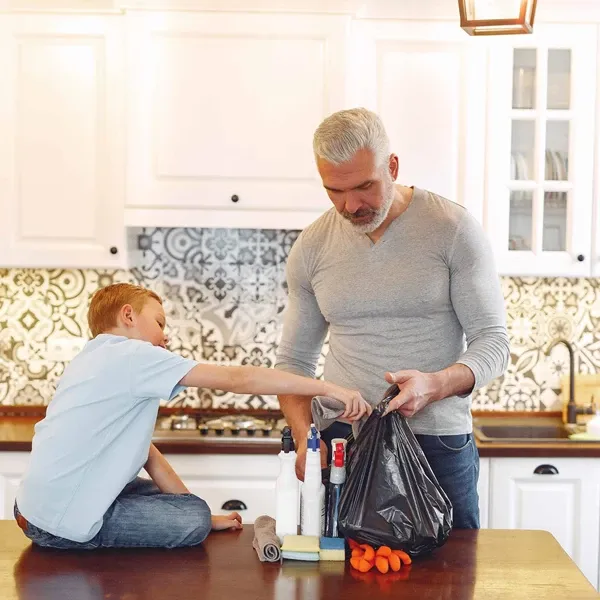
Here are our top tips to keep your kitchen and bins clean and disinfected
Our top cleaning picks that will make your life as a new mum just that tad bit easier